
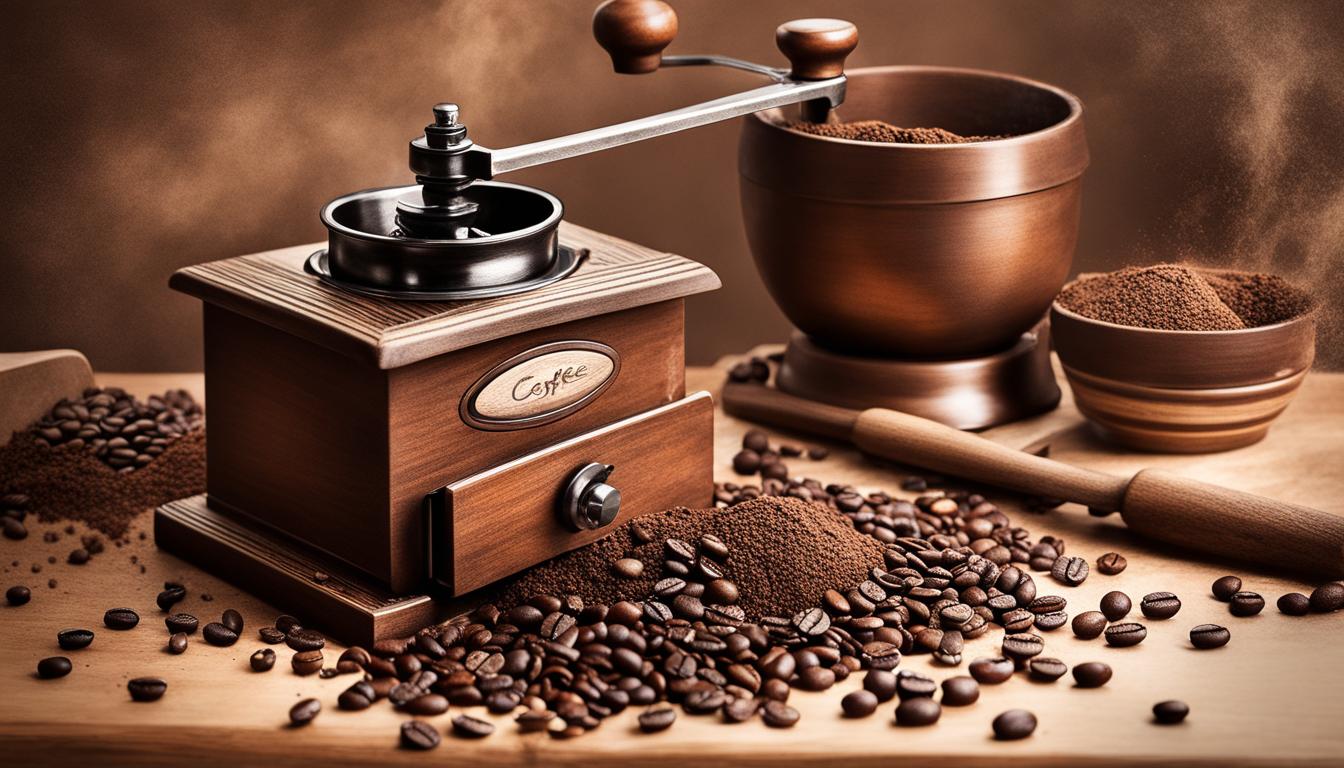
Did you know that manual coffee grinders are a popular choice among coffee enthusiasts? In fact, they account for a significant portion of coffee grinder sales worldwide, with an estimated 40% of coffee lovers preferring the manual grinding experience.
Manual coffee grinders have gained such popularity for a reason. They offer a range of benefits, from producing consistent and uniform grind sizes to being portable and easy to clean. However, it’s important to consider the potential downsides before making your decision.
Key Takeaways:
- Manual coffee grinders are favored by 40% of coffee enthusiasts worldwide.
- They offer benefits such as consistent grind sizes, portability, and easy maintenance.
- However, there are potential downsides to using a manual coffee grinder that should be considered.
Pros and Cons of Manual Coffee Grinders
When it comes to choosing a coffee grinder, manual options have their own unique advantages and disadvantages. Let’s explore the pros and cons of using a manual coffee grinder.
Precision in Grind Size
One of the standout benefits of manual coffee grinders is their unparalleled precision in grind size. With manual grinders, you have full control over the grinding process, allowing you to achieve consistent and uniform grind sizes. This level of precision is essential for brewing the perfect cup of coffee, tailored to your preferred brewing method.
Zen-like Experience
Using a manual coffee grinder can be a zen-like experience for coffee enthusiasts. The process of grinding coffee beans by hand can be meditative and grounding. It allows you to slow down and appreciate the aroma and delicate nuances of the coffee beans, resulting in a more immersive coffee brewing experience.
Environmental Friendliness
Choosing a manual coffee grinder is an environmentally friendly choice. Unlike electric grinders, manual grinders don’t require electricity to operate. By opting for a manual grinder, you can significantly reduce your carbon footprint and contribute to a more sustainable lifestyle.
Experience the Precision of Manual Grinding
Discover the art of coffee with our top-rated manual coffee grinder. Achieve the perfect grind for any brewing method, from espresso to French press, with effortless precision and control.
Unlock the full potential of your coffee beans today. Shop now and elevate your coffee experience!
Durability and Portability
Manual coffee grinders are known for their durability. Most manual grinders are constructed with high-quality materials that can withstand daily use without wear and tear. Additionally, manual grinders are compact and lightweight, making them ideal for traveling or taking on camping trips.
However, it’s important to consider the potential downsides of manual coffee grinders:
Time-Consuming
Manual grinding can be time-consuming, especially if you’re grinding a larger quantity of coffee. Unlike electric grinders that offer a quick and efficient grinding process, manual grinders require you to exert physical effort and spend more time grinding your coffee beans.
Limited Capacity
Manual coffee grinders typically have a limited capacity compared to their electric counterparts. If you regularly brew coffee for larger groups or multiple servings, a manual grinder may not be the most practical choice.
Inconsistent Grind Settings in Lower-Priced Models
While manual grinders are generally affordable, lower-priced models may have inconsistent grind settings. This can result in deviations in the grind size, affecting the overall quality of your brewed coffee. It’s important to invest in a durable manual grinder with precise grind settings for a consistent coffee brewing experience.
Despite these limitations, manual coffee grinders remain a popular choice for coffee connoisseurs who value precision, sustainability, and the hands-on brewing experience.
| Pros of Manual Coffee Grinders | Cons of Manual Coffee Grinders |
|---|---|
| Unparalleled precision in grind size | Time-consuming |
| Zen-like and grounding coffee brewing experience | Limited capacity for large quantities |
| Environmentally friendly and sustainable | Inconsistent grind settings in lower-priced models |
| Durable and long-lasting | |
| Portable and suitable for travel |
Pros and Cons of Electric Coffee Grinders
When it comes to grinding coffee beans, electric coffee grinders offer unbeatable convenience and speed. With just the push of a button, these high-quality electric grinders can effortlessly and quickly grind your beans to perfection.
One of the major advantages of electric coffee grinders is their versatility. Most models come with multiple grind settings, allowing you to choose the perfect consistency for your brewing method. Whether you prefer a fine grind for espresso or a coarser one for French press, electric grinders have you covered.
Another benefit of electric coffee grinders is their large capacity. Equipped with a spacious bean hopper, these grinders can handle larger quantities of coffee, making them ideal for entertaining or daily use. Say goodbye to constantly refilling your grinder and enjoy the convenience of grinding more beans at once.
However, it’s important to consider the drawbacks of electric coffee grinders as well. Firstly, they can be noisy, which may not be ideal for those who value a peaceful start to their day. Additionally, electric grinders tend to be more expensive compared to their manual counterparts. While they offer convenience, versatility, and large capacity, the price tag may be a factor to consider.
In some cases, low-end electric grinders may not provide consistent grind sizes, which can impact the overall quality of your coffee. It’s important to invest in a high-quality electric grinder to ensure you achieve the perfect grind every time. Furthermore, electric grinders require a power source and may require more maintenance and cleaning compared to manual grinders.