
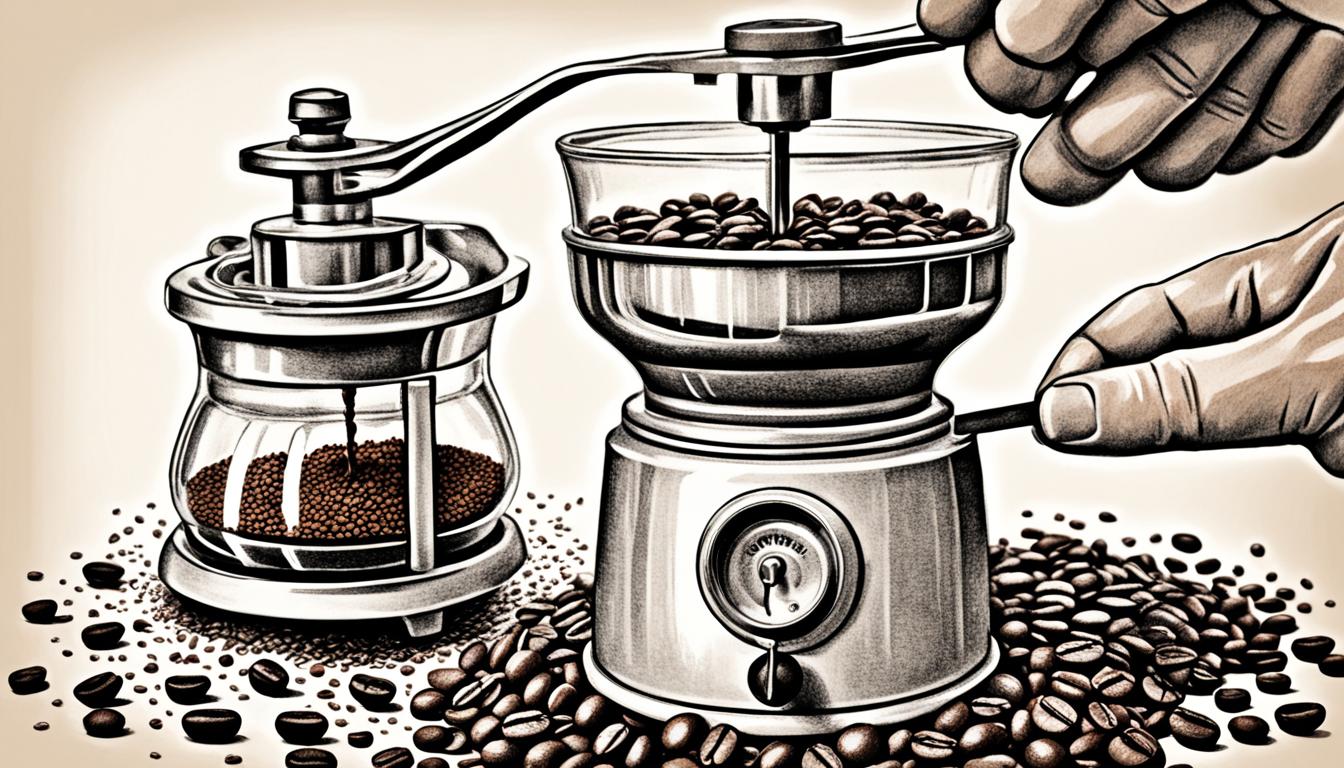
Did you know that using a manual coffee grinder can elevate your coffee brewing experience and unlock the full flavor potential of your beans? With a manual coffee grinder, you have complete control over the grind size, resulting in a better extraction and a more balanced cup of coffee. So, what is the best brewing method for coffee ground with a manual coffee grinder? Let’s explore the options and find out!
Key Takeaways
- Manual coffee grinders provide a more precise and customizable grind size, leading to enhanced flavor extraction.
- Burr grinders are recommended for their consistency and adjustable grind settings.
- Consider factors such as budget, grind settings, materials, and ease of use when choosing a manual coffee grinder.
- Different brewing methods require specific grind sizes to achieve optimal extraction and flavor.
- By selecting the right grind size and using a manual coffee grinder, you can unleash the full flavors of freshly ground coffee.
Why Choose a Manual Coffee Grinder?
Using a manual coffee grinder offers several advantages. Firstly, it allows for enhanced flavor precision by providing control over the grind size, resulting in a more precise extraction and a fuller, more balanced cup of coffee. Manual grinders are also portable and do not require electricity, making them ideal for coffee enthusiasts on the go.
The quiet and meditative ritual of manually grinding coffee can enhance the overall coffee experience. The process of hand grinding your beans can be a calming and therapeutic practice, allowing you to fully immerse yourself in the aroma and anticipation of brewing the perfect cup.
“Manually grinding coffee is a quiet and meditative ritual that brings me closer to the art of coffee making. It’s a peaceful moment before I indulge in the rich flavors of freshly ground beans.” – Coffee Enthusiast
Additionally, manual coffee grinders are often built with durability and longevity in mind. With fewer mechanical parts compared to electric grinders, they tend to be more reliable and less prone to mechanical failures. This means your manual coffee grinder will be a long-lasting investment that will continue to deliver exceptional grinding performance for years to come.
A manual coffee grinder is not only a practical choice for coffee lovers looking for adjustable settings and portability but also a way to elevate the coffee brewing experience into a quiet and mindful ritual. Its durability and longevity ensure that you can enjoy the convenience and enhanced flavor of freshly ground coffee for a long time to come.
Experience the Precision of Manual Grinding
Discover the art of coffee with our top-rated manual coffee grinder. Achieve the perfect grind for any brewing method, from espresso to French press, with effortless precision and control.
Unlock the full potential of your coffee beans today. Shop now and elevate your coffee experience!
Comparison of Manual Coffee Grinders
| Manual Coffee Grinder | Burr Grinder | Blade Grinder | Adjustable Settings | Portability | Enhanced Flavor | Durability and Longevity |
|---|---|---|---|---|---|---|
| Brand A | Yes | No | Yes | Yes | Yes | Yes |
| Brand B | Yes | No | Yes | Yes | Yes | Yes |
| Brand C | Yes | No | Yes | Yes | Yes | Yes |
Table: A comparison of manual coffee grinders showcasing their key features and benefits.
Anatomy of a Manual Coffee Grinder
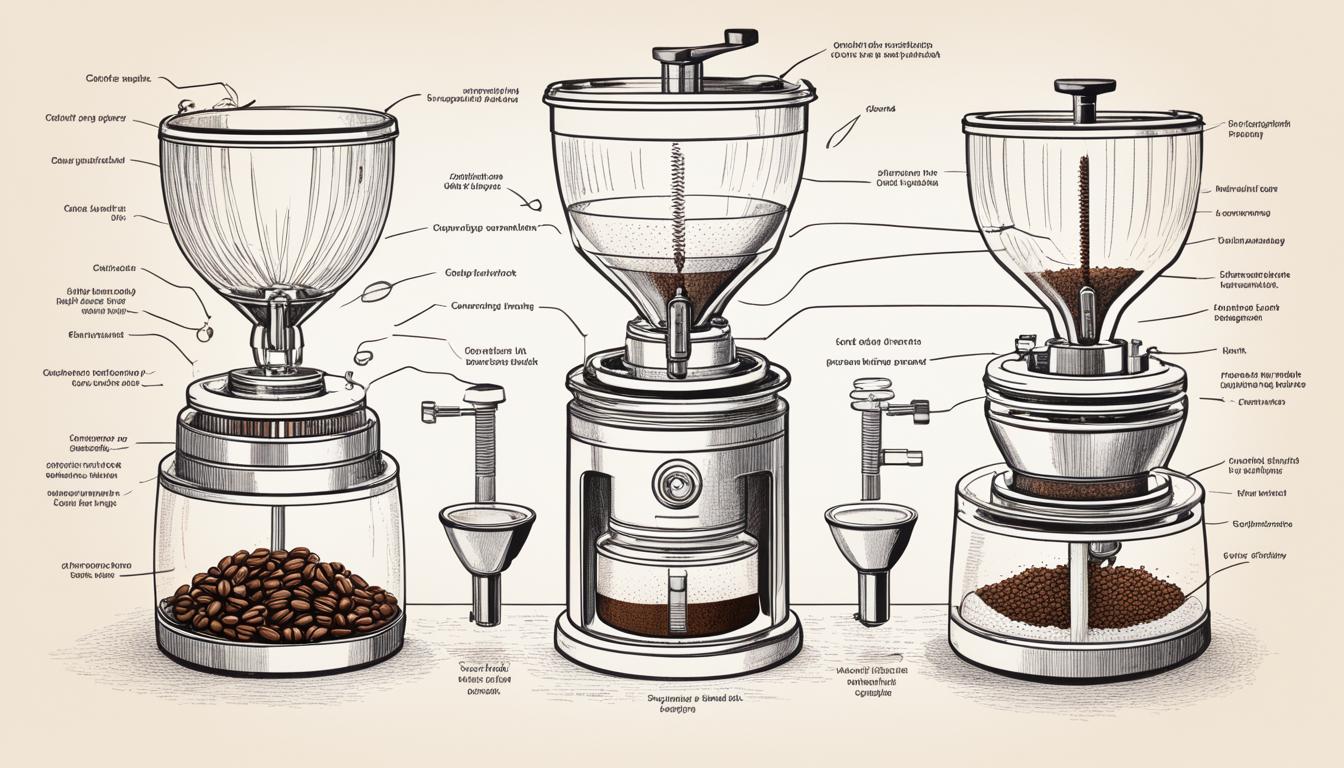
A manual coffee grinder is a complex yet fascinating tool that consists of several key components, each playing a crucial role in delivering a perfect cup of coffee. Understanding the anatomy of a manual coffee grinder will help you appreciate its craftsmanship and navigate the grinding process with precision.
The Burr Mechanism
At the heart of a manual coffee grinder lies the burr mechanism. This component is responsible for crushing and grinding the coffee beans into uniformly sized particles, ensuring a consistent grind for optimal flavor extraction. Manual coffee grinders typically feature burrs made of stainless steel or ceramic, which are known for their durability and ability to maintain sharpness over time.
The Adjustment Dial
Manual coffee grinders often come equipped with an adjustment dial or knob. This feature allows you to control the grind size with precision. By simply turning the dial, you can choose a finer or coarser grind, depending on your brewing method and personal preference. This level of customization empowers you to experiment and find the perfect grind size for your desired flavor profile.
The Handle and Crank
To operate a manual coffee grinder, you’ll need a handle and crank mechanism. This mechanical leverage enables you to rotate the burr mechanism, grinding the coffee beans effectively. The handle and crank are designed to provide comfort and ease of use, allowing you to effortlessly grind your coffee beans and enjoy the process.
The Grounds Chamber
Once the coffee beans are ground to perfection, they are collected in the grounds chamber. This chamber serves as a storage compartment for the freshly ground coffee, keeping it ready for brewing. Some manual coffee grinders feature transparent chambers, allowing you to monitor the amount of coffee you’ve ground and ensuring you have the right quantity for your brew.
Now that you understand the anatomy of a manual coffee grinder, you can appreciate the intricate design and functionality of this timeless tool. Whether you’re a coffee enthusiast seeking complete control over your grind size or simply enjoy the meditative process of manually grinding coffee, a manual coffee grinder offers a unique experience that elevates your coffee brewing journey.
| Component | Description |
|---|---|
| Burr Mechanism | The stainless steel or ceramic component responsible for grinding coffee beans into consistent particles. |
| Adjustment Dial | A dial or knob that allows for precise control over the grind size. |
| Handle and Crank | A mechanical leverage system used to rotate the burr mechanism for grinding. |
| Grounds Chamber | A compartment where the freshly ground coffee is collected and stored. |
The Importance of Choosing the Correct Coffee Grind Size
The flavor and extraction of your coffee are heavily influenced by the grind size. Each brewing method requires a specific grind size to achieve optimal results. For example, French press coffee calls for a coarse grind to prevent over-extraction, while pour-over methods like Hario V60 and Chemex require a medium-coarse to medium grind. Siphon coffee makers and stovetop espresso machines work best with a medium grind, while Turkish coffee demands an extra fine grind.
By selecting the correct grind size, you ensure that the extraction is balanced, resulting in a well-rounded and flavorful cup of coffee. To achieve consistent and precise grind sizes, it is recommended to use a burr grinder rather than a blade grinder. Burr grinders produce a more even grind, which contributes to a better extraction and overall coffee experience. With a manual coffee grinder, you have more control over the grind size, allowing you to fine-tune it according to your preferred brewing method.
Whether you’re brewing French press, pour-over, siphon, stovetop espresso, or Turkish coffee, choosing the right grind size is essential for unlocking the full flavors of freshly ground coffee. Combine this with the precision of a manual coffee grinder and you’ll elevate your coffee brewing experience to a whole new level.