
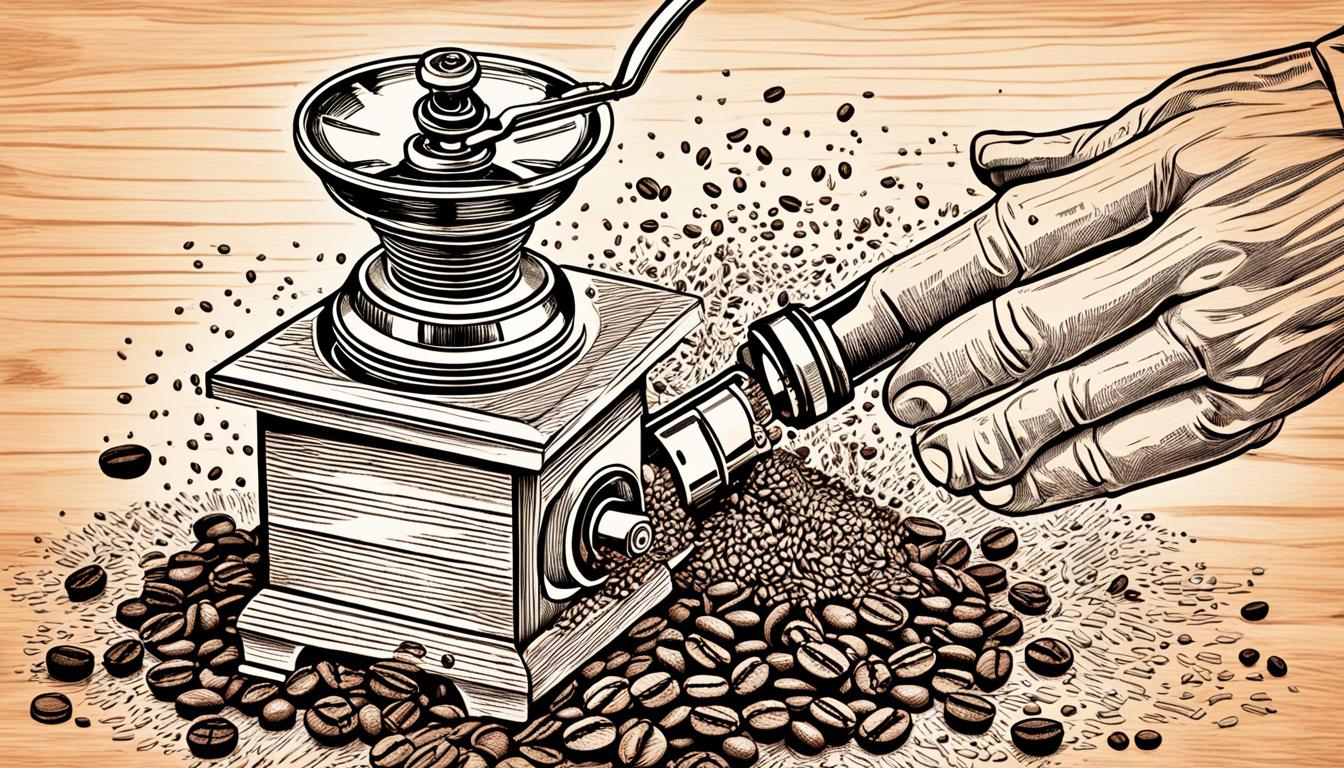
Before the advent of electric appliances, grinding coffee beans by hand was the only way to bring out the rich flavors and aromas of freshly ground coffee. Even with the convenience of electric coffee grinders today, manual coffee grinders have maintained their popularity among coffee aficionados for various reasons.
Key Takeaways:
- Manual coffee grinders have a long history and are valued for their unique grinding experience.
- Manual coffee grinders offer greater control over grind size and consistency.
- Electric coffee grinders provide convenience and speed, making them ideal for larger quantities of coffee.
- Consider your personal preferences, brewing habits, and budget when choosing between a manual or electric coffee grinder.
- Both manual and electric coffee grinders have their own set of advantages and disadvantages.
Pros and Cons of Manual Coffee Grinders
Manual coffee grinders offer coffee enthusiasts a unique grinding experience with their own set of benefits and drawbacks. Understanding the advantages and disadvantages of manual coffee grinders can help you make an informed decision when choosing the perfect grinder for your needs.
Pros of Manual Coffee Grinders
- Portability: Manual coffee grinders are compact and lightweight, making them ideal for travel or camping trips. You can enjoy freshly ground coffee anywhere, without the need for electricity.
- Adjustable Grinding: Most manual coffee grinders allow you to adjust the grind size, giving you more control over the extraction process. This versatility is especially beneficial for different brewing methods such as espresso, pour-over, or French press.
- Quiet Operation: Unlike electric coffee grinders, manual grinders operate silently, allowing you to enjoy a peaceful morning coffee routine without disturbing others.
- Consistency: Manual coffee grinders provide a consistent grind size, resulting in a more even extraction and balanced flavor in your brewed coffee.
- Affordability: Manual coffee grinders are often more affordable compared to their electric counterparts, making them a budget-friendly choice for coffee enthusiasts.
Cons of Manual Coffee Grinders
- Manual Effort: Grinding coffee beans manually requires physical effort, which can be tiring for some users, especially when grinding a large quantity of coffee.
- Time-consuming: Manual grinding takes more time compared to electric grinding. If you’re always in a hurry, the added time required for manual grinding may not be ideal for you.
Now that you’re aware of the pros and cons of manual coffee grinders, you can weigh the benefits against the drawbacks to determine if a manual grinder is the right choice for you. If portability, adjustable grinding, and affordability are important factors for you, then a manual coffee grinder may be the perfect addition to your coffee brewing routine.
Now, let’s take a look at the pros and cons of electric coffee grinders.
Pros and Cons of Electric Coffee Grinders
Electric coffee grinders offer a convenient and efficient way to grind coffee beans. They come with their own set of advantages and disadvantages that coffee enthusiasts should consider before making a decision. Here are the pros and cons of electric coffee grinders:
Pros:
- Convenience: Electric coffee grinders save time and effort compared to manual grinders. With just a push of a button, you can quickly grind your coffee beans to the desired consistency.
- Consistency: Electric grinders provide consistent and uniform grinding results, ensuring a more even extraction and better-tasting coffee.
- Adjustability: Most electric grinders offer multiple grind settings, allowing you to customize the grind size for different brewing methods such as espresso, drip coffee, or French press.
- Capacity: Electric grinders usually have larger grinding capacities, enabling you to grind a larger quantity of coffee beans at once.
- Efficiency: Electric grinders are designed to be efficient and can grind coffee beans much faster than manual grinders.
Cons:
- Price: Electric coffee grinders tend to be more expensive than manual grinders, particularly for models with advanced features and high-quality burrs.
- Noise: Electric grinders can be noisy during operation, which may be a consideration if you prefer a quieter coffee grinding experience.
- Size: Electric grinders are typically larger and take up more counter space compared to manual grinders.
- Power dependency: Since electric grinders require electricity to operate, they may not be suitable for certain situations, such as camping or traveling.
- Heat generation: Some electric grinders generate heat during the grinding process, which can potentially affect the flavor of the coffee beans.
| Pros | Cons | |
|---|---|---|
| Convenience | ✓ | |
| Consistency | ✓ | |
| Adjustability | ✓ | |
| Capacity | ✓ | |
| Efficiency | ✓ | |
| Price | ✓ | |
| Noise | ✓ | |
| Size | ✓ | |
| Power dependency | ✓ | |
| Heat generation | ✓ |
Conclusion
After weighing the pros and cons of manual and electric coffee grinders, it is clear that both options have their own unique advantages and drawbacks. When it comes to choosing the right coffee grinder, it all boils down to personal preferences, brewing habits, and budget.
Experience the Precision of Manual Grinding
Discover the art of coffee with our top-rated manual coffee grinder. Achieve the perfect grind for any brewing method, from espresso to French press, with effortless precision and control.
Unlock the full potential of your coffee beans today. Shop now and elevate your coffee experience!
Manual coffee grinders offer a hands-on and immersive coffee grinding experience. They are portable, durable, and often more affordable than their electric counterparts. Additionally, manual grinders are known for their ability to produce a consistent grind size, resulting in a flavorful and aromatic cup of coffee.
On the other hand, electric coffee grinders offer convenience and speed. With the push of a button, you can easily grind your coffee beans to a desired consistency. Electric grinders are ideal for individuals who prioritize convenience and time-saving features in their coffee brewing routine.
In conclusion, whether you choose a manual coffee grinder or an electric coffee grinder, the most important thing is to consider your own preferences. Think about the brewing method you prefer, the amount of coffee you typically grind, and the level of control you want over the grind size. By taking these factors into account, you can find the perfect coffee grinder that suits your needs and helps you brew that perfect cup of joe every time.